12/2/2020
As my groups original idea was quite broad within mechanics we decided to branch off in 3 different directions to try and have different iterations of the original game. Patrick is working on iteration 1 which is based on competitive play between players. Phillip is working on iteration 3 which is based on a journey/collecting type version. I am working on iteration 2 which is a cooperative adventure where you get given a task/event for the game and try to complete it by the games end.
I decided to work on the cooperative iteration as most board games are more on the competitive side, a game where players work together would be nice and different to work on. When thinking about the game idea I wanted to look into any games that are similar within board games and digital games.
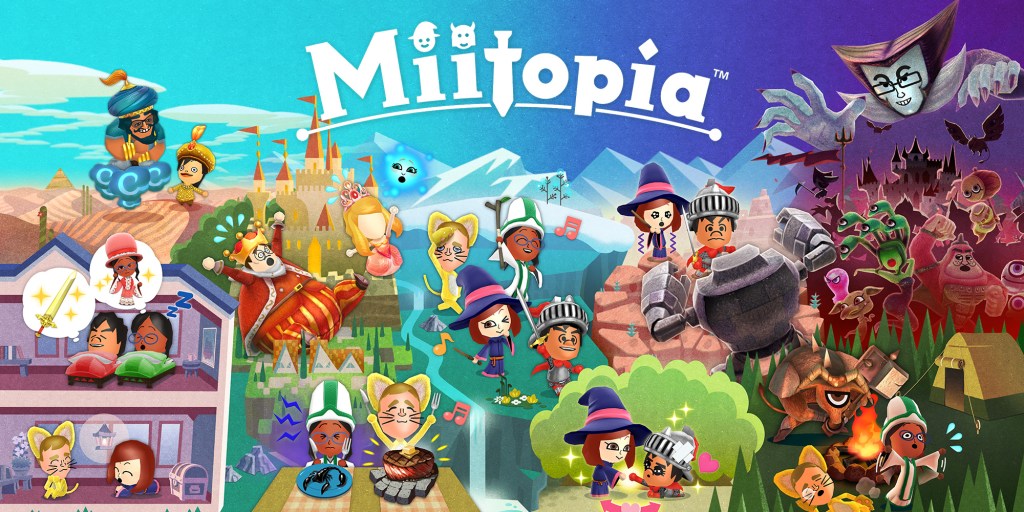
Miitopia is an excellent example of turn placed gameplay within a digital game that works well with having different characters in play which team up to defeat monsters and recover allies. I feel that this game heavily influences my research in turn based strategy games that involve a little chance.
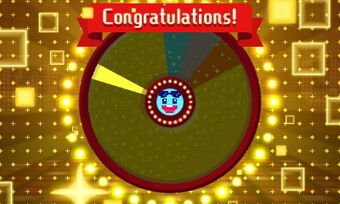
Within the game there is a mini loot spin which works like a roulette wheel, giving you whatever reward you land on, I feel that this would be interesting to explore as an attacking mechanic instead of using dice which are most used within board games. Instead of relying on numbers to determine your damage to an enemy the wheel could have segments listed for all those things like: attack, double hit or even missing.
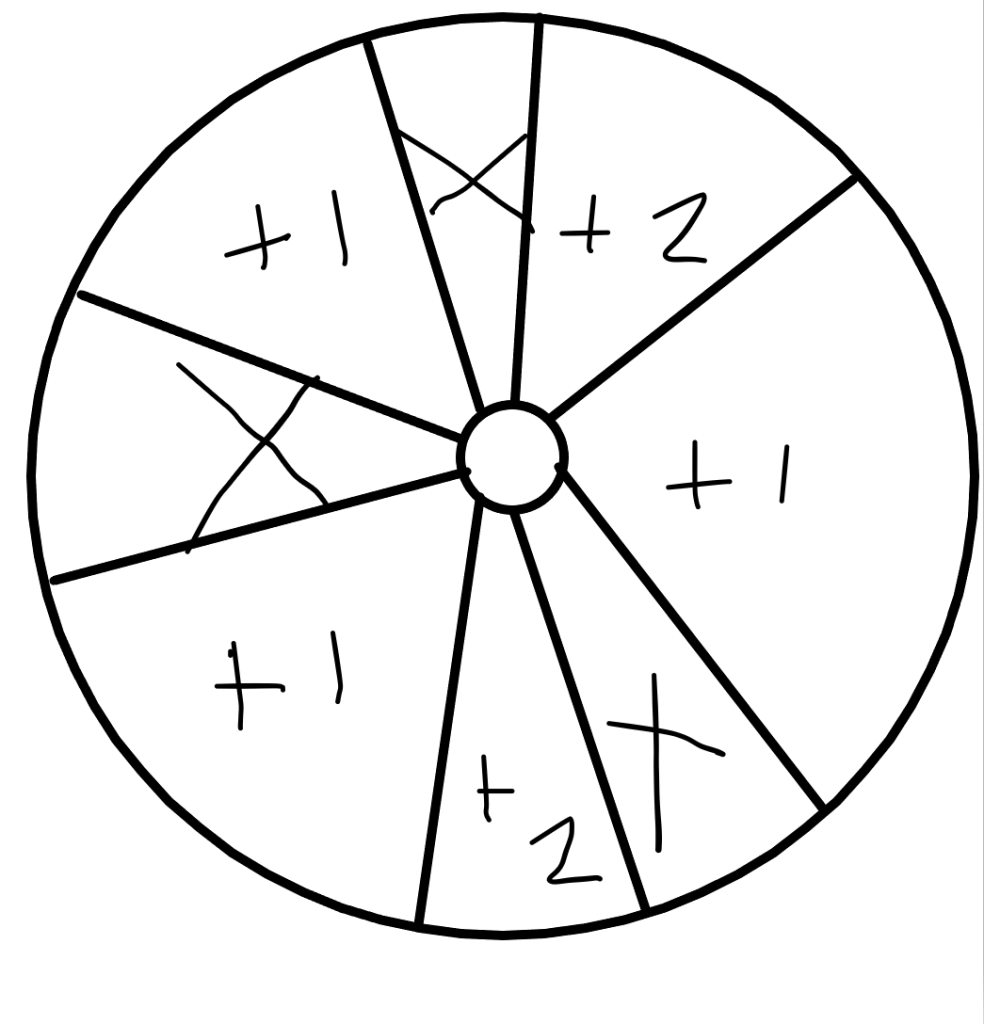
Here’s an example of how it could look simply and be split up like. I’ve split the sections somewhat evenly between the 3 outcomes and made certain sections bigger and smaller to make it harder to get a double attack or easier to miss. I feel like being able to miss will make the mechanics and strategy of the game allot more interesting game play wise rather than having to do the maths to work out what a dice role means.
Dungeons and dragons is a good example of cooperative play within a board game that sticks to a clear narrative laid out by the dungeon master. It involves an element of chance when rolling the dice to attack or make a decision but I am more looking at it from the perspective of their being a group of people playing their own characters that interact with one another.
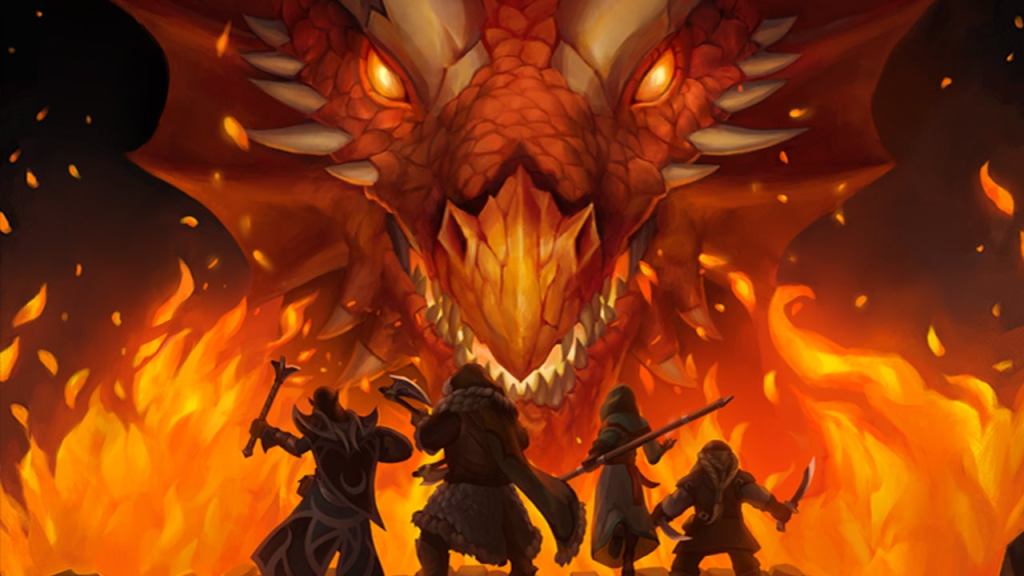
I believe there is allot of strategy behind games like this as there are so many possible direction it can go, not only because of the endless amount of narrative but because of the individual characters that are created. The different possibilities are endless and although we cant allow our game to do this: we could have a set character card that explains that characters attributes. I think this would add a bit of depth to the game when deciding which “class” your going to play and being strategic in your groups abilities and how they complement one another.
Character classes –
Without knowing the theme of our game the classes will have to be very vague and be able to fit into all genres if possible. A great example of vague character classes is League Of Legends, it uses simple terms to define how a character works rather than what it is. Examples –
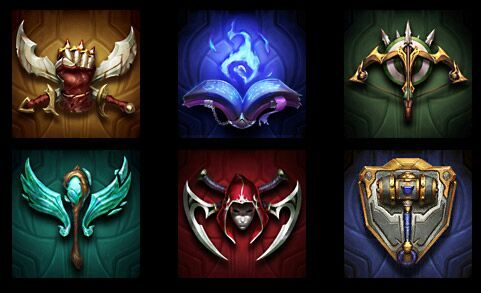
Besides the Mage class, they are very vague and that’s good as they could apply to any themed character. For Example: Marksman could be an archer in a fantasy based world but a guns-man in a more sci-fi styled world. For the rest, the same theory applies that in each world there is a role that links to these 6 base classes.
Giant Bomb’s classes and descriptions are a perfect example of base classes –
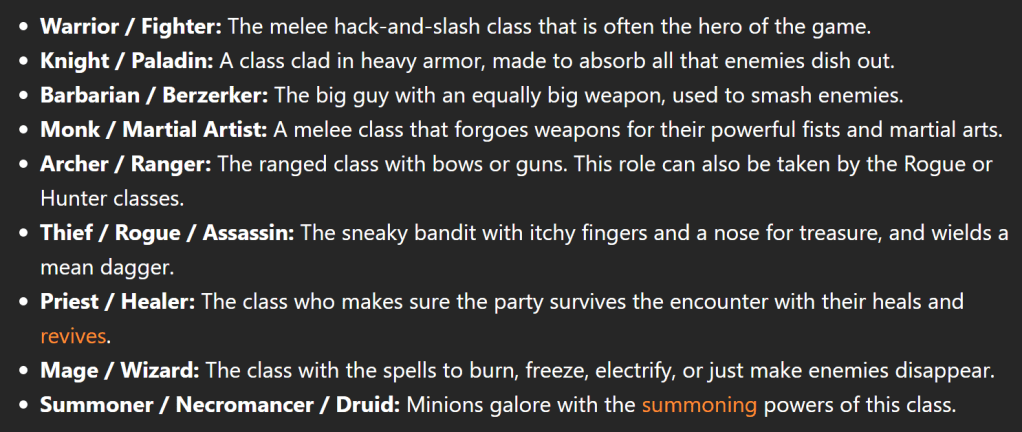
You can clearly see the relation between these classes and Leagues, even having some of the same. Some of the examples here could be put into the same or similar roles such as: Healer and Summoner could be attachments to the Mage, especially as a Mage is a general term for an overall magic user. I feel that Paladin and Barbarian could be in similar category of Tank and same with Fighter and Monk being in the same class. Although you can split all classes/roles into more sections and branch them out the base classes I feel would be ideal for the board game we are producing.
I feel like each character card should have a different ability which helps to make the game unique and also each character. For example: Having more supportive roles or Tank roles means you could have more inventory space, being a Fighter allows you to do more damage per attack. Having simple but effective character changes allows for strategic game play and allows the player to feel like they are part of a team (especially when they are able to carry an extra item one person wants.)
Tiles –
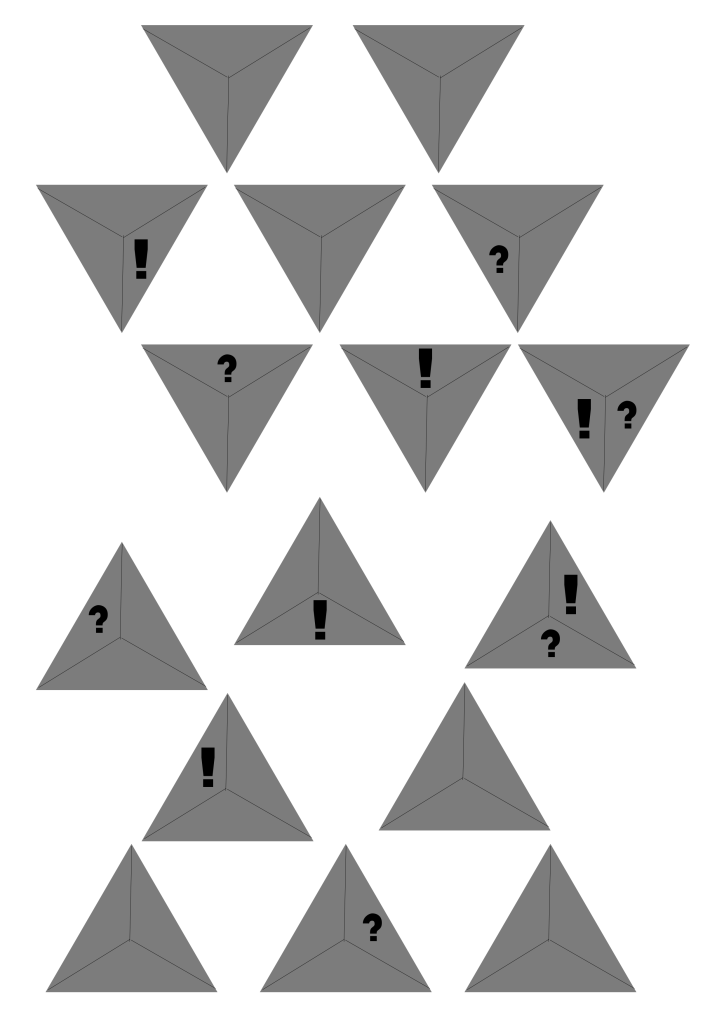
Having randomly placed tiles each turn or at a certain time in the game will give the game more interactivity with the element of chance. Iv’e used ! to represent enemy tiles and ? to represent chance cards which could include: Traps, Items or scenarios. The triangle tiles make the game more unique as tile games are mostly make in squares or hexagons. As there are 3 sides to a triangle having 3 players for the game would be good and having each movement made be only allowed to be 3 spaces makes the movement less generic than rolling a dice.
Event cards –
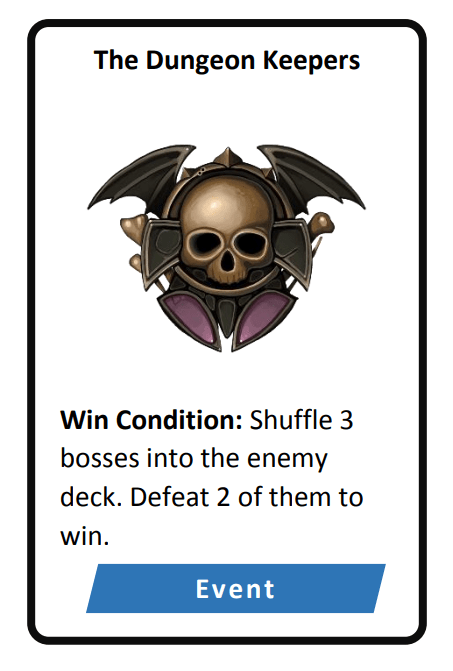
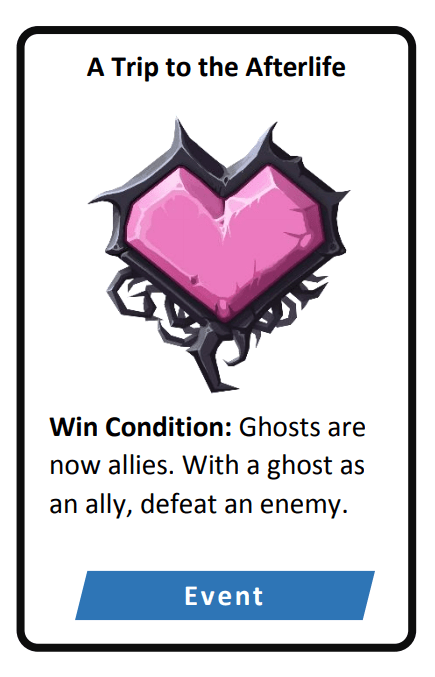
I feel like event cards would add another level of randomness to each game. Having different characters being played and tiles being randomly placed can be topped of with a random event which you have to complete to win the game, almost like a quest. Having the same goal every game does make it loose its charm and so spicing each game up with a random goal would keep players interested and amused by each adventure.
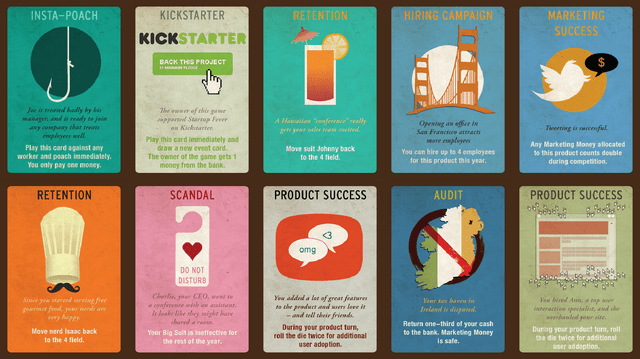
In tiled based games its hard to have multiple “endings” or win conditions but I think with this idea its very possible to be achievable. Having the tiles only have 3 options helps with this as the event cards could be to do with collecting a certain item or fighting a certain amount of monsters or getting to a certain place/tile or even getting an ally to die and then resurrect them with a particular item.
These ideas are very much “if’s” but I believe they would work really well with the current mechanics in play. Having different classes along with the event cards will make for more strategic play as certain events might require certain characters to be in play or have a certain ability. Having different character is play will add and extra bit of thought into the game, making each event card achievable in different way.
Item Cards –
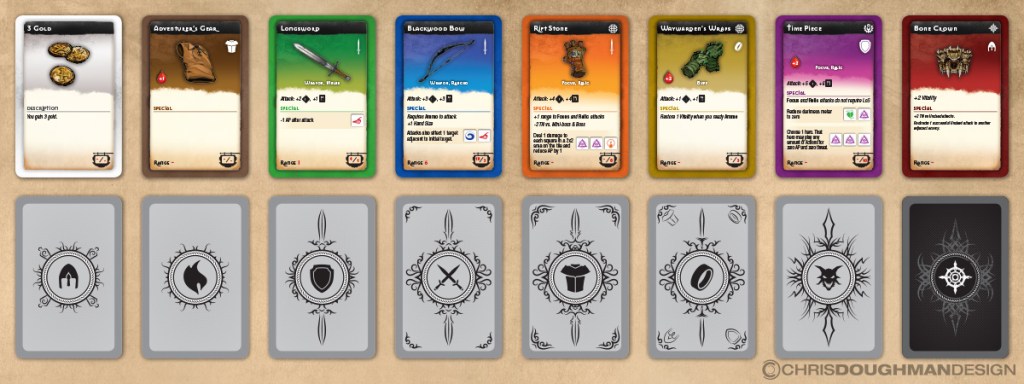
The items that you collect could be sentimental, equitable or usable. Having 3 separate types of items will help with the event cards being unique and different per game expanding there horizons. Possibly collecting a sacred item and taking it to a certain tile could be a goal within the game or collecting power up items to defeat a certain enemy. Possibly having special tiles that you just implement into the tile deck based on the event card you receive would be cool.
Enemy cards-
Prototype Making –
Tiles –
When trying out the first tile pattern I found it to be I quite hard to move characters between the spaces provided and also define what spaces were combat or item spaces. Trying out different patterns for each triangle was a good way to define a clearer movement mechanic and how spaces would be defined from one another.
Something that I wanted to be able to clearly define on the tiles is how the item and combat spaces would work. My first 2 designs: I thought would work but I felt that they lacked when it came to movement. The first one allowed for alright movement but didn’t have spaces for item and combat, this I felt was an issue so I moved onto my second design. This design allowed for more space for items and combat spaces however didn’t have the right movement as the other one, this tile has 6 edges which allowed for 3-6 directions.
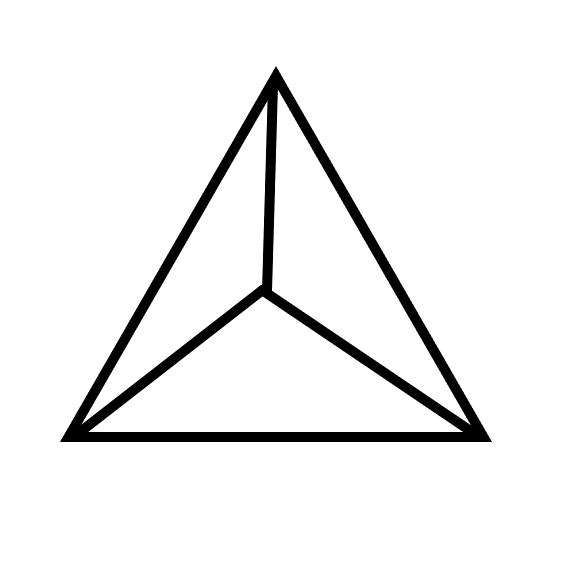
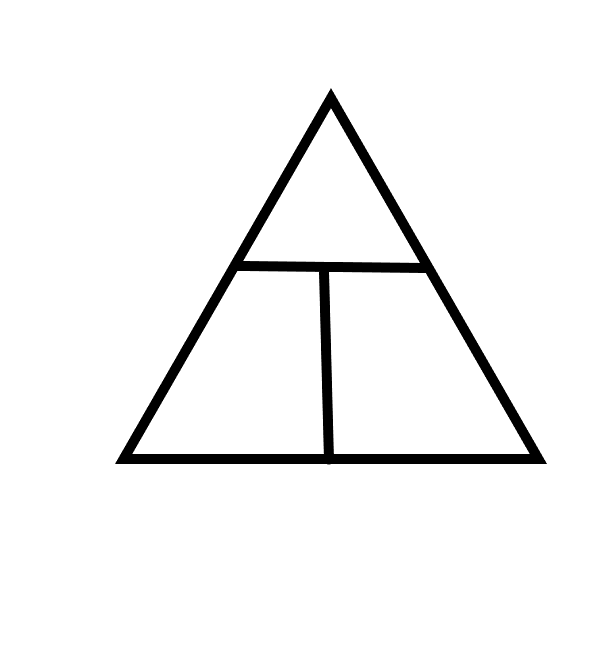
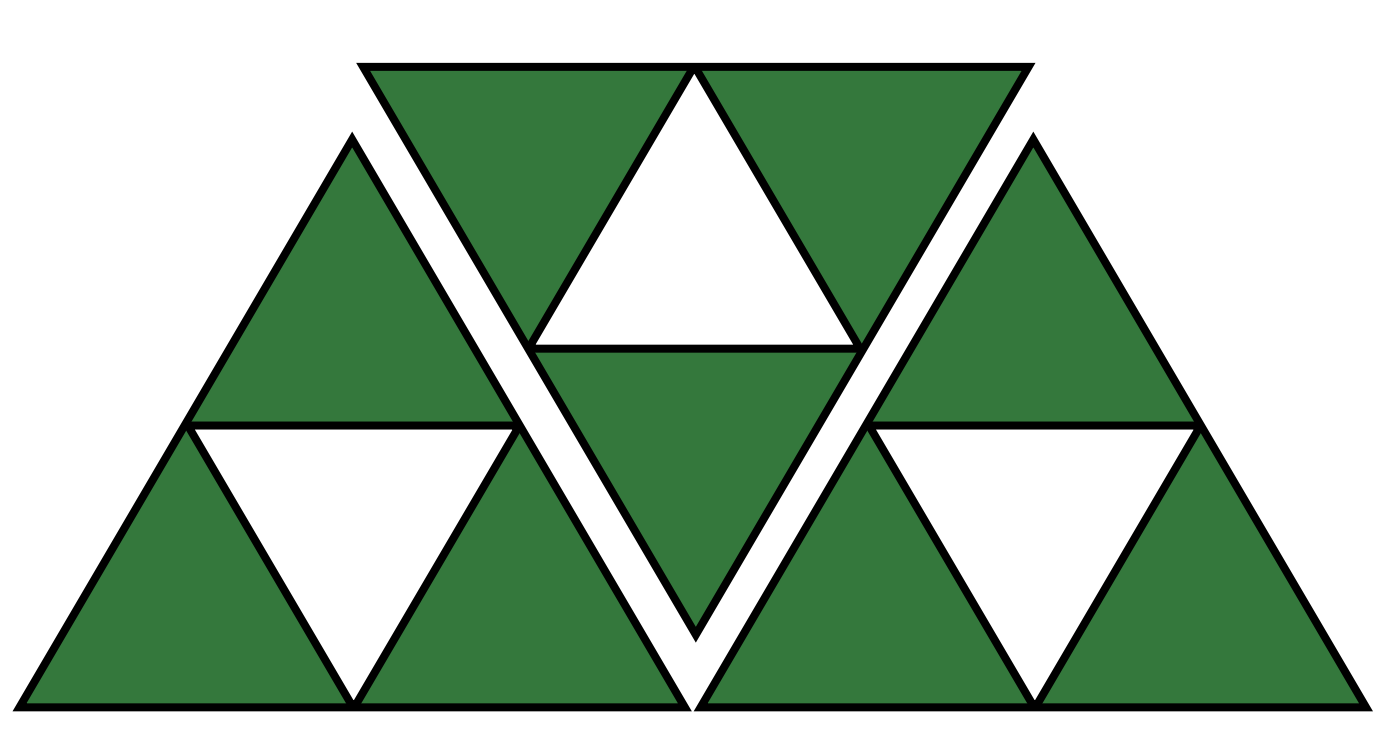
My final design allowed for both a good amount of movement and had space for an item or combat icon. Having the middle triangle be white allowed me to put the symbol of the appropriate space, it also allowed me to have an extra movement space allowing for more strategic play.
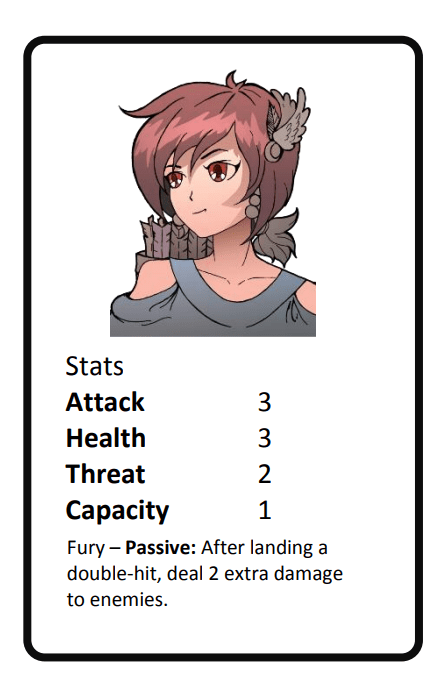
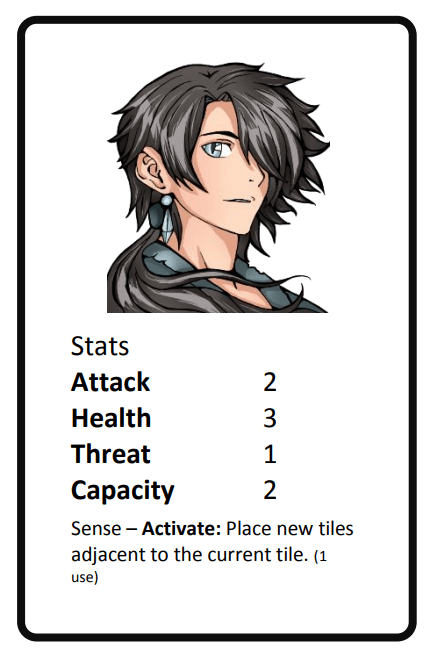
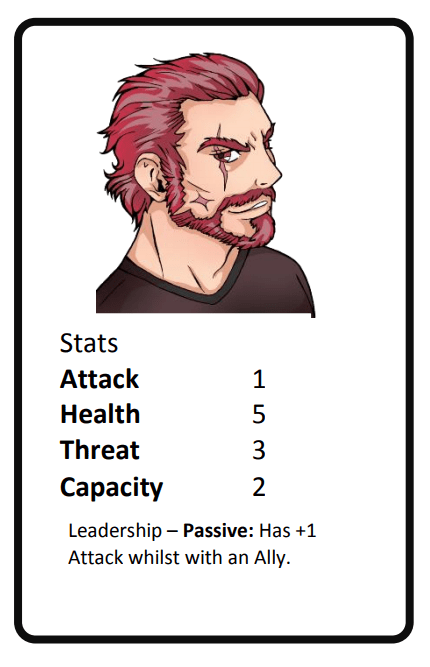
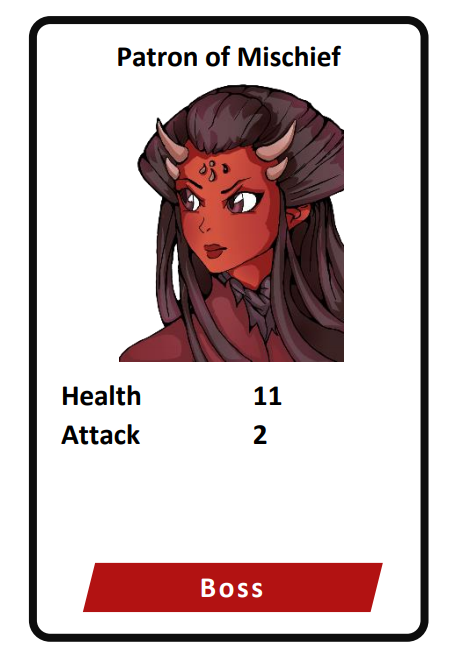
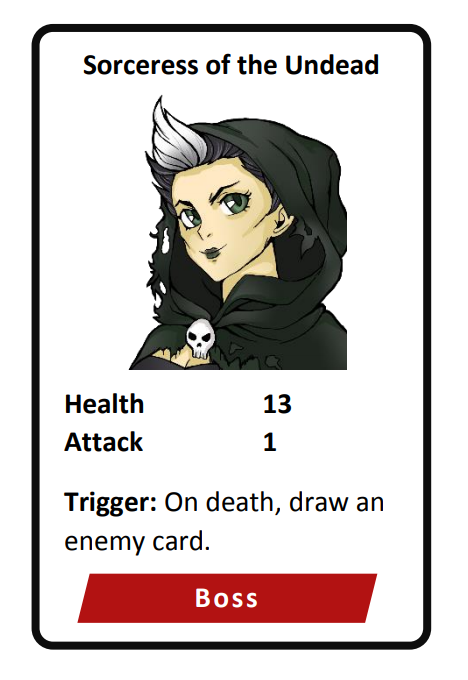
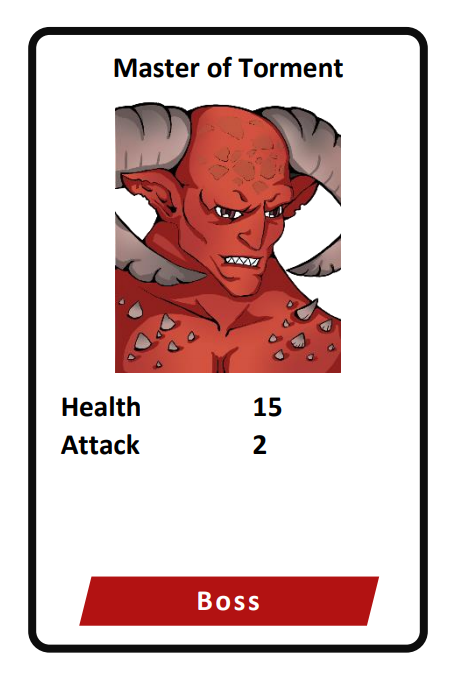
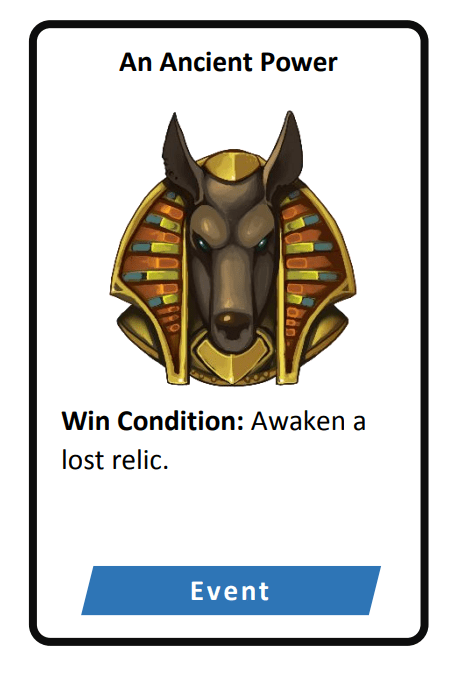
20-40 mins game play
Rules –
Set up-
- Shuffle each deck of cards – items, enemies and events
- Each player selects a character they wish to play as for this game.
- As a group select an event card from the top of the deck – this is your win condition
- Lay 1 tile face up – this is your characters starting point (if this tile has an item or enemy on it, shuffle back into the deck until you place an empty tile)
- Lay adjacent tiles face down, these will be explored and turned over: once moved onto by a character.
Gameplay –
- Each player may move 3 sub-triangles per round using an edge, take turns to do so. You may move on item/combat sub-triangle spaces but not land on the same sub-triangle as another character.
- When moving into an unexplored tile, flip it over to reveal its contents and place face down, new adjacent tiles to that one.
- At the end of each movement round, define whether any of the characters are on tiles with symbols, these characters will select a card from whatever deck the symbol corresponds to.
- The game continues till all characters die or the win condition is met.
Tiles –
Sword tiles – when landing on a combat tile: at the end of movement round draw an enemy card. Take turns to attack or defend.
Attacking – Spin the roulette wheel to determine how much damage you deal to an enemy +1 is normal damage, +2 is double damage and X is a miss
Defending – Defending will make you the highest threat target, spinning the roulette wheel allows you to try dodge, land on miss to dodge successfully, not landing on miss makes you take the hit.
After everyone has taken their turn the enemy will attack the player with the highest threat and then the round ends. Continue till the enemy is dead.
Item tiles –
When landing on an item tile: Wait until movement round is over and then take an item card from the deck, If there are multiple characters on the same tile by rounds end decide who gets the item.
Temple tile – Return a special item to the temple to gain a reward.
 Nerice's Semester 2 portfolio