Development Of the Playful AR

Trello board link

Torch App –

I found the app itself very nice and interesting to play around with but feel like it took allot of time to set up and also didn’t have some of the interactions I wanted from it.

I started playing around with the movement and scaling I found it frustrating how I couldn’t have multiple anchor points within my space so most of the time objects would float or go through things.

I found the UI of the app to be minimalist and simple to follow, very straight forward. Although it was easy to use I found the experience to not be what I expected and had some issues with lag and also the controls of moving objects around a sceen

Some other things I noticed when using the app is that it lacked the ability to input simple interactions such as “link object to current position” so the object would move beside you as you moved.

In this video I’m testing out the interactions and how easy it is to move things around while in the scene, it is extremely slow but the video gets my point across of one way of watering the plants.

Origami mini games –

I then put my attention the origami mini games and which would be good to start with or be shown as an example.

I started by going through my sketch book and selected designs based on feedback given by peers. The frog ideas seemed to be the most successful so I went into working on which mini game would work best and how the user would interact with them.

In the first idea I thought having a racing game would be good for physical interaction and competition but the practicality of it was low. Having this be AR and also having a limited amount of space this idea got me at a loss so I tried to think about other ways to work the frog into a mini game.

Mt second idea was to have a score based game and I was inspired by the ring toss game at fairs. Having something score based will allow users to be competitive against one another and feel a drive to do better then their competitors keeping people interested in this mini game longer.
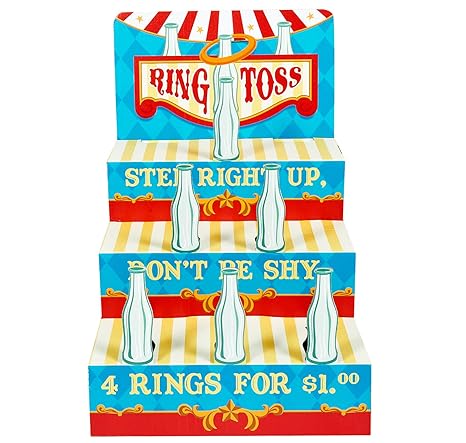
Carnival Games Party Supplies - Ring Toss Game by BirthdayExpress ...

No online interactions, as this will only be accessible at the event/location we want to have local multiplayer. Not between the phones but between the people interacting with each other. It starts a conversation and gets people to interact with others and the environment.  
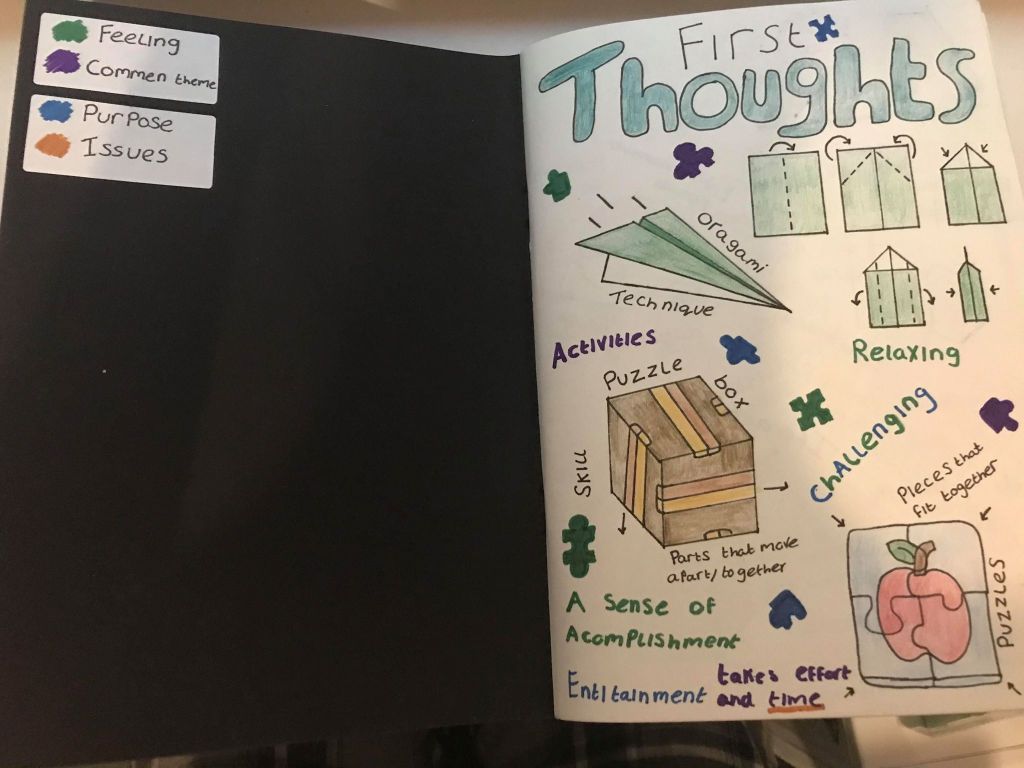
Sketchbook Tour

My first thoughts –

At the start of this project I set high expectations for myself laying out some rules that I wanted to stick by. I used a colour coding system at the beginning of my book and set each colour to a word that I would explore through annotations. This helped to mark out what I was thinking at the time and what issues may arrive with going forward with a specific idea. This was short lived as my book became more of a space to test and prototype rather than explore ideas and there uses.

AR I know already –

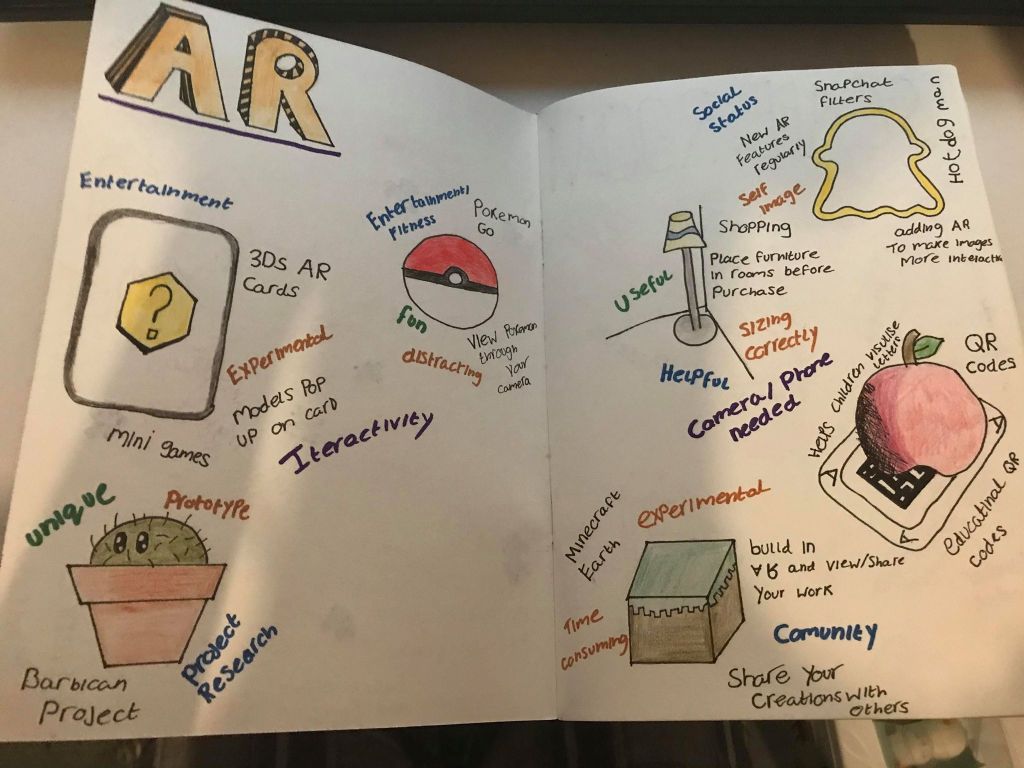
My second thought when beginning this project was to identify what I already know about AR and how I could use previous software and apps to help me understand AR and its successes. The main theme I found with AR is that it would need some sort of interactivity to be useful to people or be a repayable experience that would change each time. From this I wanted to look more into how AR works and what requirements it needs to work correctly.

The Escape room Field trip –

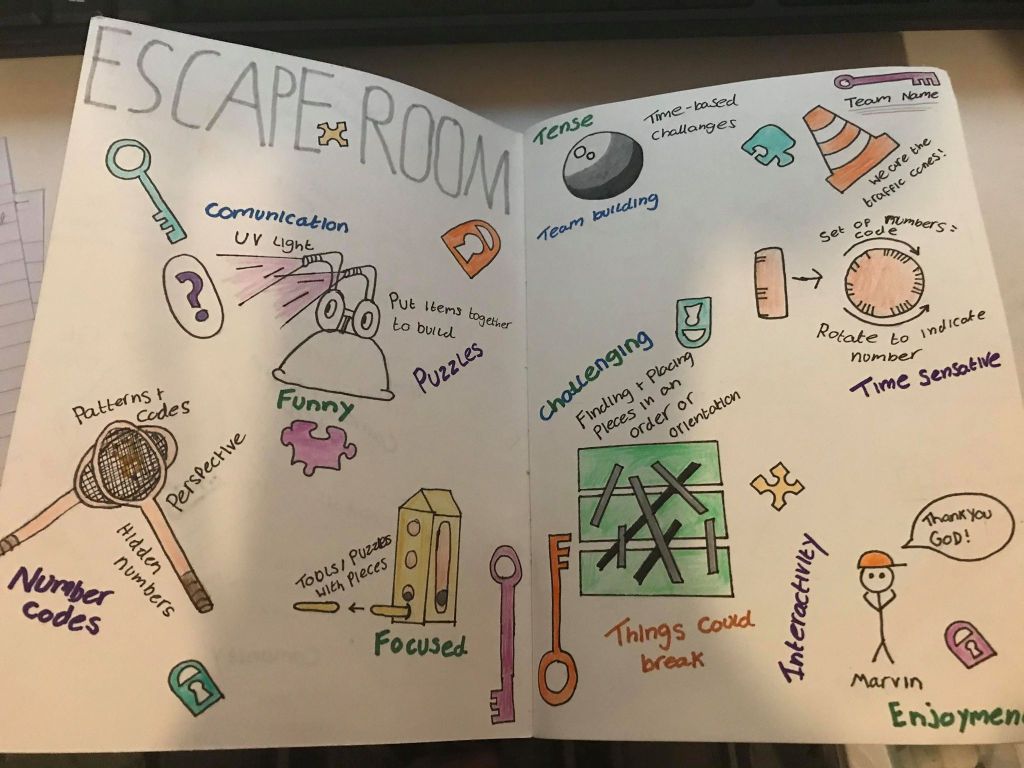
On visiting the escape room we were split into groups so we could tackle one of the rooms. As images were not allowed to be taken after we had finished I tried to recollect all the main pieces of the experience and jot them down in a loose fashion so that they could be referenced in different ways and not copy the experiences mechanics directly.

I found the experience to be very useful when it came to thinking about how to produce an AR artifact, this was mainly through the interactivity and playfulness of the escape room. I wanted to create something someone could interact with but for that interaction to bring a playful aspect to the space it was activated in.

After doing research in the space my group wanted to have our experience in we began planning out how things could look and work within the environment.

Frog Origami –

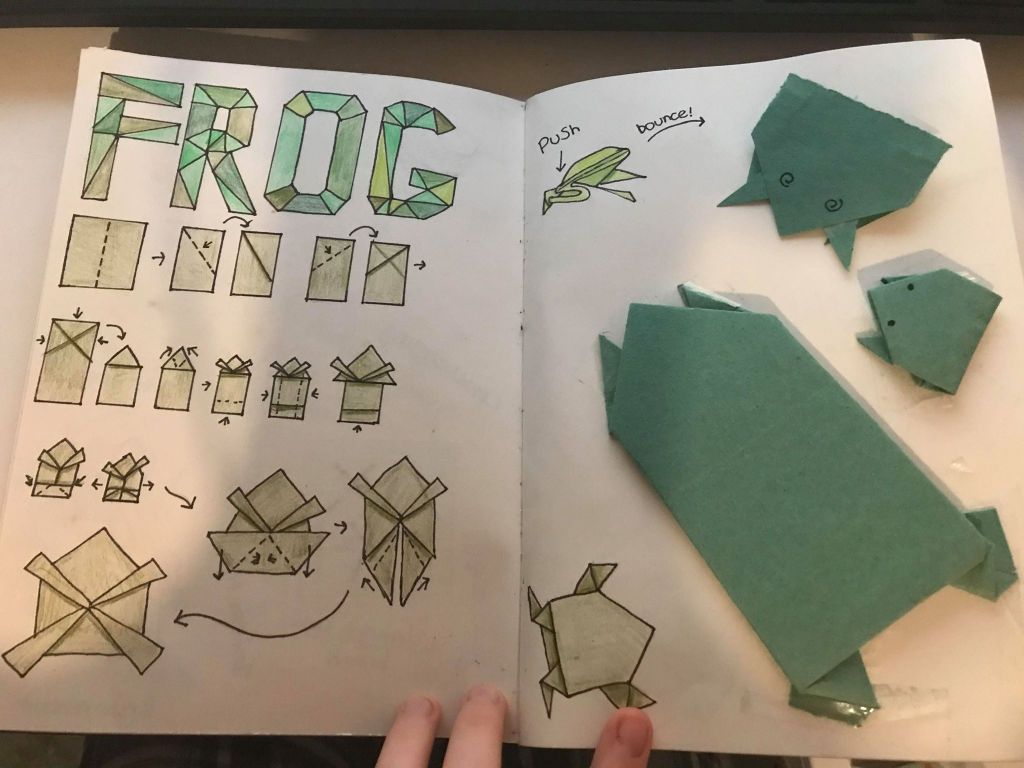
I started my origami experience by creating some test pieces and making sure I document how to fold them as that is what I wanted the interactive element of our experience to be. By being able to have the instructions on the side I was able to receive feedback by my peers to see if they were easily followed or needed adjustment for my idea.

Crane Origami –

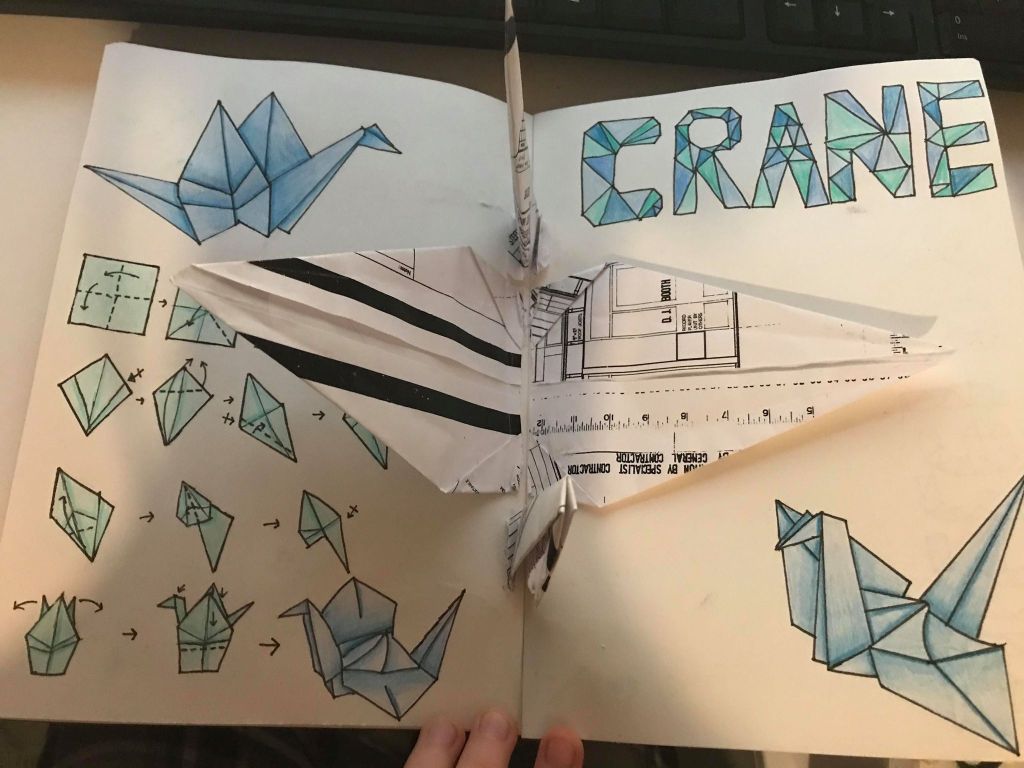
I imagined users being able to build the crane and be able to throw it around the space, Possibly having a mini game where the user would have to keep taping the crane to keep it up in the air or having the user get to steer the crane around the space almost like a drone or remote controlled car.

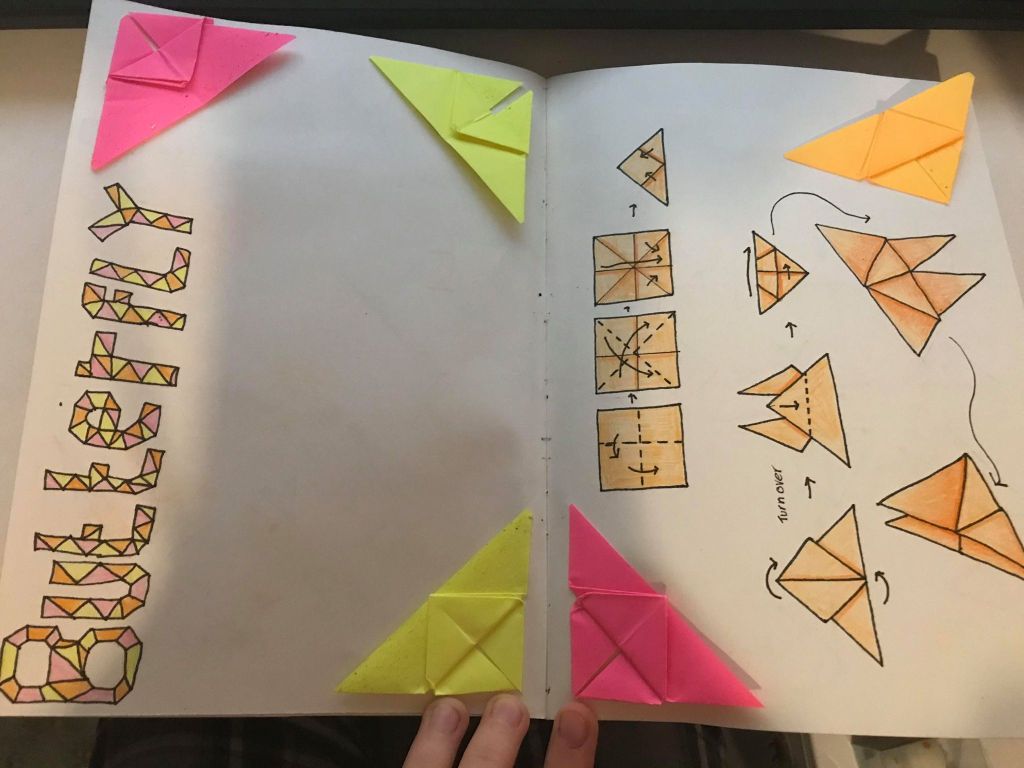
Butterfly Origami –

For the butterfly’s i imagined users playing a butterfly match up mini game where you have a time limit to match up as many pairs of butterfly’s as possible. By this point my group has settled on the Greenhouse/Graphics room which I felt this idea would go great with. Having some of the graphics materials be on the butterfly’s would link both of the spaces of past and present.

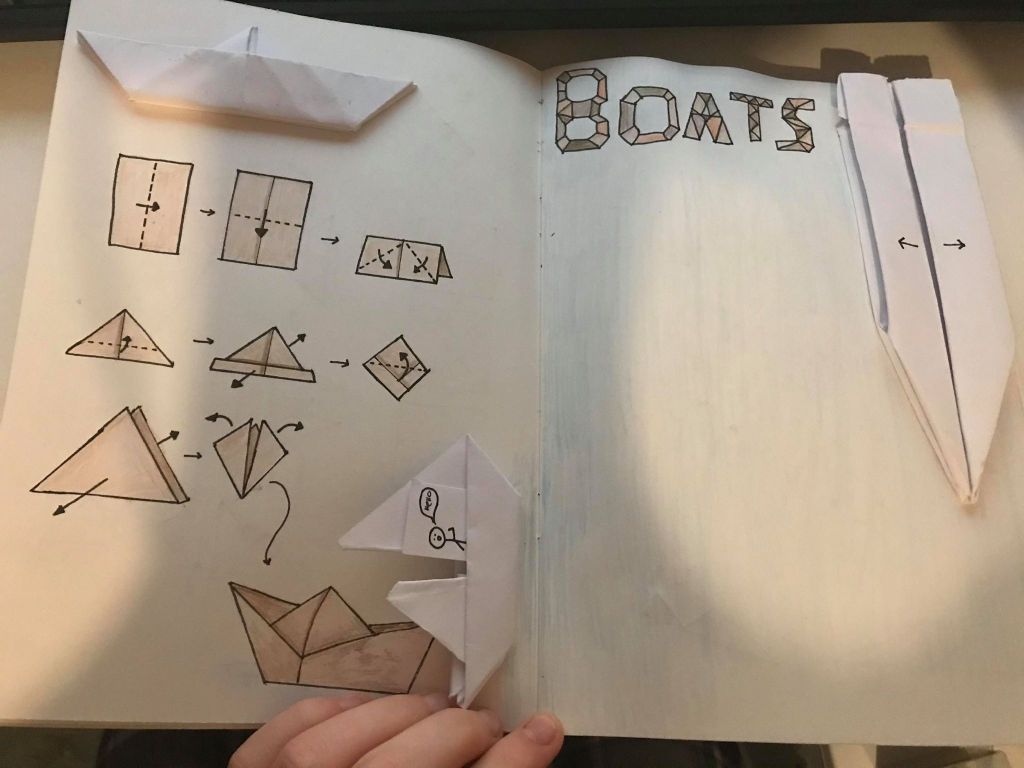
Boat Origami –

I had fun with the different variants that could be created with this origami, for this interaction I was thinking it could be more of a visual pleaser rather than an interaction unless it was the same as controlling the crane. Possibly having the boat being controlled by the user you would sail it on a flat space within the room and have it collect items as points or have it be a race.

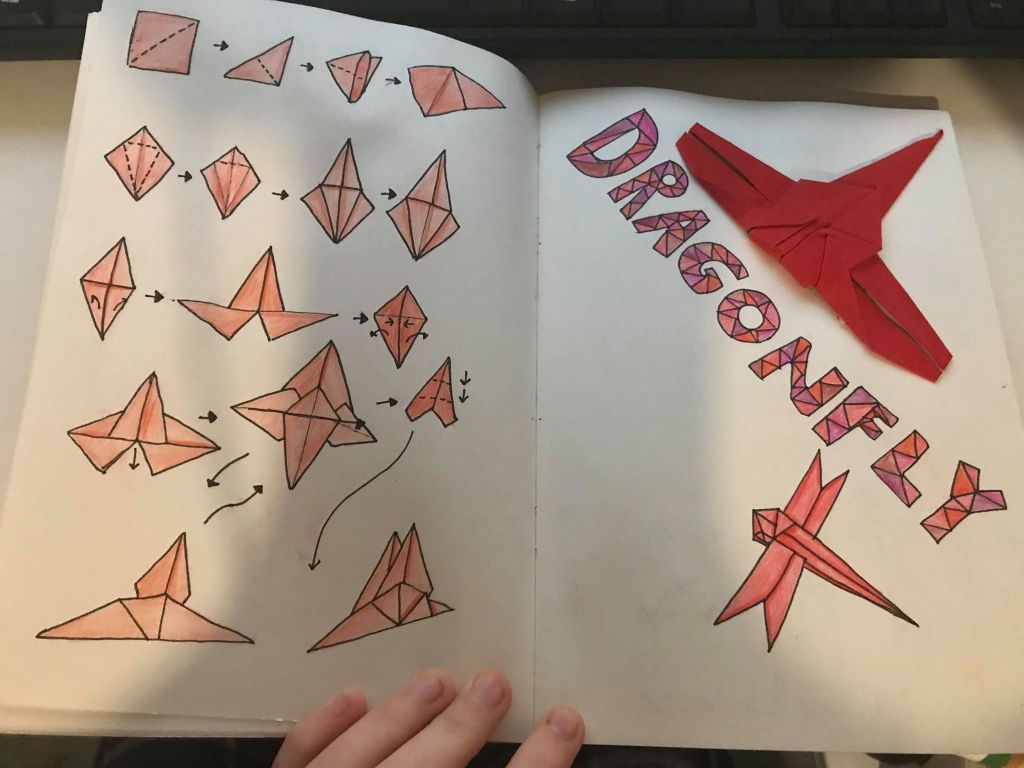
Dragonfly Origami –

I felt that having something fly through the room would add the the feel of the experience and give users an added sense of travelling back into the past. Dragonfly’s would start to appear and fly on a set flight path around the sky, Possibly having some hover around the user when they are watering plants.

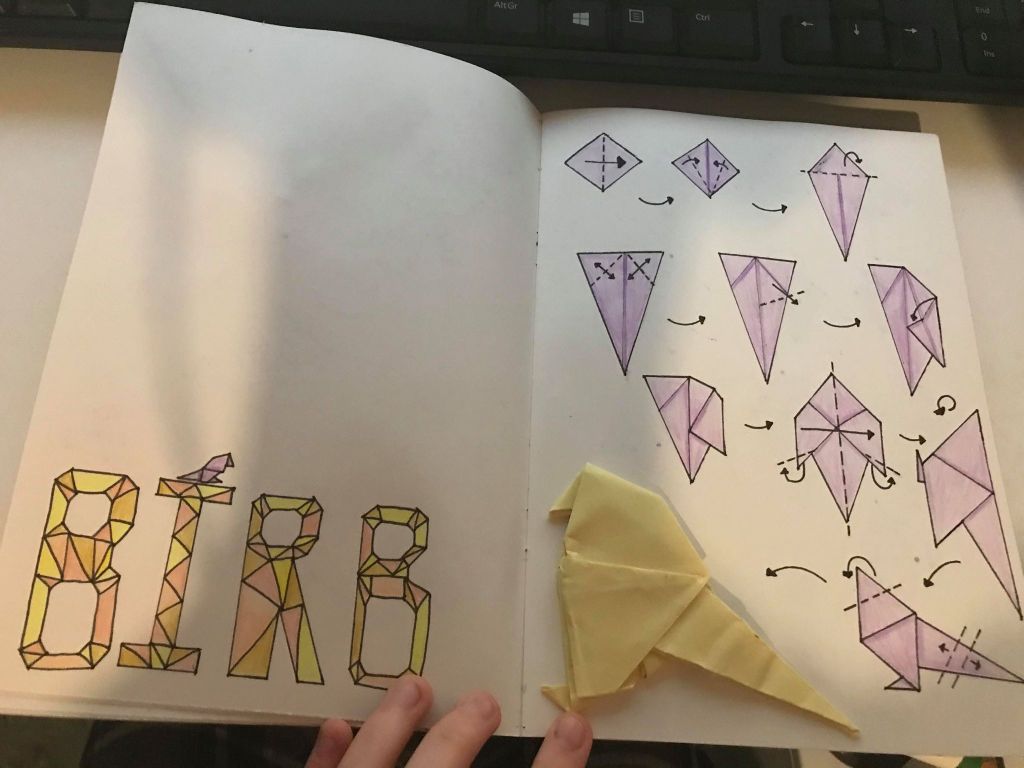
Bird Origami –

For our experience we wanted the space to be both visual and interactive but also include sounds of the environment and animals within the space. Almost like building up and orchestra as you collect more origami animals the more sounds would start to play making the user feel like they were apart of the space.

The bird would be a nice edition to the sound effects we wanted to incorporate and possibly having them sit around the room up high you could click them and put your finger flat in front of the camera to initiate that they fly down and land on your finger. I feel that this would very much connect the user to the environment and make them feel like they are really apart of the experience and can interact and effect the environment.

Iris Origami –

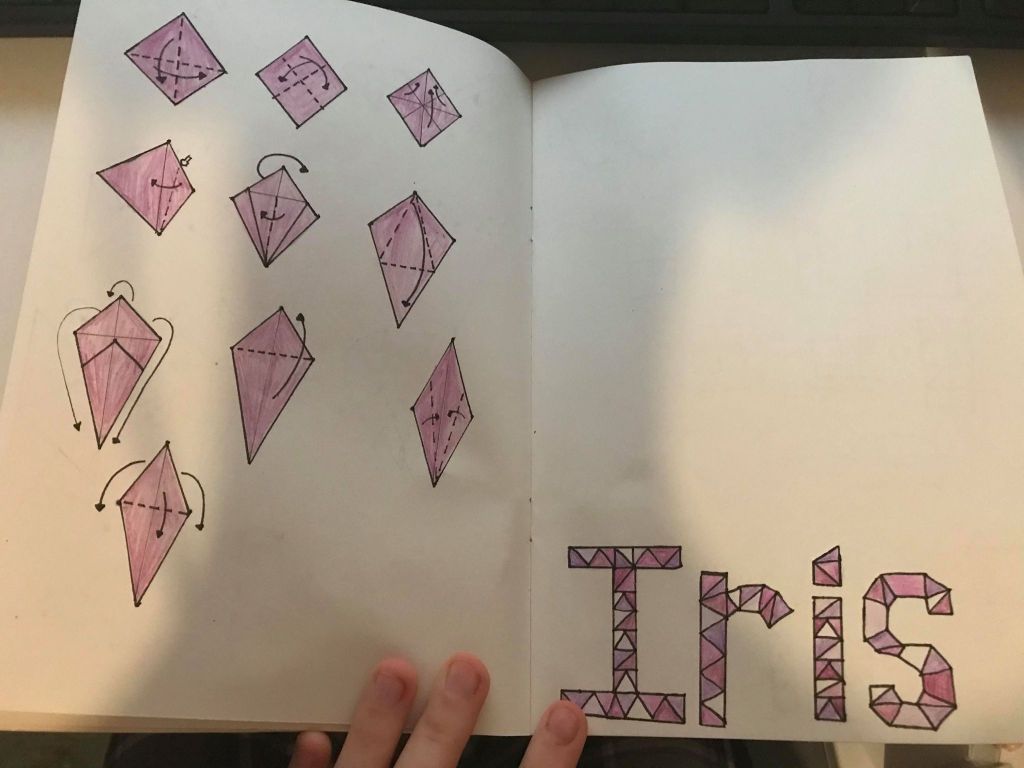
For the greenhouse experience to resemble a greenhouse we wanted to include plants and flowers either real or origami made so I decided to experiment with this a little and see how hard making an origami flower would be. I can say it was allot harder than expected and I felt that the plants couldn’t be made out of origami and grow like we wanted them to be when watered. We decided to look into paper-make instead of origami for the plants and have the plant switch between states rather than being built like the animals.

Unfortunately with this project having physical origami to put into my book once I had finished all the drawing and writing I lost some of the pieces I made.

Pinwheel Origami –

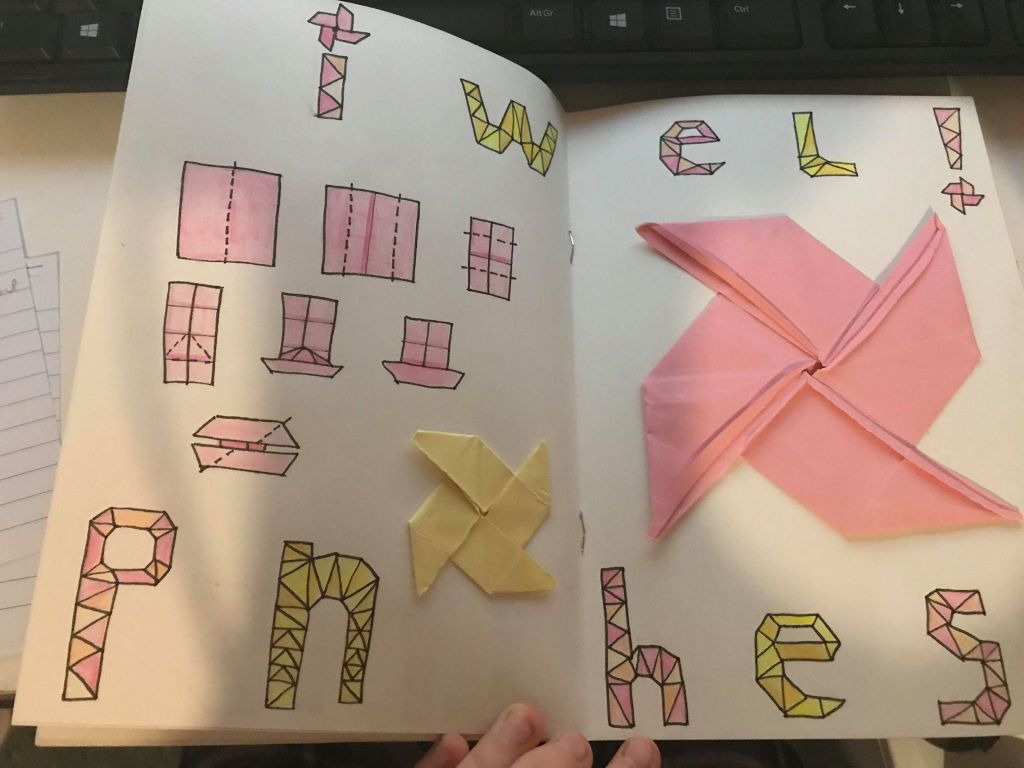
With the pinwheels I would they would add a little bit more colour and visual appeal to the space. Being able to spin them in the direction and speed you want would have been fun, possibly being able to design them so you can have your own effect on the environment.

Overall I had a good start to my Sketchbook but fell off towards the end and didn’t get to finish what I had planned to do or go back and follow the annotation rule I wanted to stick by. For next project I want to try and focus on getting the basic work done first and go back through and make the work pretty when I have no other work to be finished. “perfectionist right here” 😀

The greenhouse – Iterate

1 – Greenhouse area – Viewing the plants and interacting with origami animals having sounds that would heighten the experience.

2 – Growing plants with a watering can, can interact with origami animals

3 – Interact with frogs by touching their backs and they can play leap frog/ race frogs competitive and interact with other players.

4 – Cranes that can be thrown into the air and fly around.

5 – Water plants by dragging icons on screen onto AR elements

6 – Tilt screen to water plants (More efficient and more interactive)

7 – being able to follow the folding patterns to be able to access the animals mini games

8 – Animals automatically fold when walked close to and are available.

9 – Watering plants gets new animals and mini games to be accessible.

10 – Growing the space should be the main interaction (seeing how the space changes from present to past)

Rodina talk

Rodina – family – experimental design

Performance in design – Working for now and the future, Selecting sections of a process and focusing on some not all.

Experiment, concept, society, technology, imagination.

Using bodies as a material rather than a thing – using bodies to create structures within AR.

Man became a goat for design purposes – Goatman – creating a new experience using his body as the material of purpose and experimentation

Cards – Role, Transformation, resistance, change, voice, perception.

Told to design products, what about designing spaces. Creating unstable surfaces so that change is promoted in design.

Transforming yourself into proformace that can lead to experimentation and education.

You are designing a process, a play/playfulness. Inner transformation is not visible – creating and re-creating performances between people.

Space for human exchange and to be together – playgrounds – imagine together – loosen the senses – loose yourself from reality. Used to empower people and get them to use their own voice.

Where does the value of work out work come from – quality of labour. Material labour (using pc.) Where is the value in what you do? How can I be a designer and make money but no one sees the design besides the clients.

To preform be the outer of the design and you will see the value of your work. Doing playful labour within in-material work. Ultimate workers – preforming like mad because we love design – having the best design is hard and time inducing.

Work spaces created to be playful and be participated within – interactivity and experimentation.

Putting designer on the shelf like they are selling themselves for work – showing time and work ethic and how it effects a person as a designer. being self employed or freelance means being overworked and abused by the industry.

What kind of world is the result of our work? How does your work effect the future? How do people in the future see your work? What do you want to leave behind?

How to make the internal knowledge of a book within a space. See the contents of the book with AR/VR. Get knowledge of the book by being within it and not reading it.

Extraction – Extracting chemical and materials to make products that better the world much like designers extract research and theories to create a product. Some materials are rare and limited – designers work is limited and has to be carefully crafted.

Use your imagination to amplify what matters, activate the positive change.

Questions –

How do you choose a Medium to work in – it develops within the imagination, and the theory of it. The medium is dependant on what your creating and what you want to show visually.

As a female do you think your gender has effected your design career? – Design for the gender your most comfortable with – don’t limit yourself to your gender and work with people who have skills you don’t have or skills you have that they don’t have.

Have you ever rejected a client? – clients sometimes expect unrealistic expectations – Not working within the right conditions such as time, money and facilities. Keeping ideas open is vital to a designer. Don’t say no, take the idea and list your needs before taking on a job.

Your work is similar to conditional design – You have to see people as brushes or colours, see people as their own selves, participants can’t be controlled but observed and learnt from.

What would you suggest people hone their skills on such work on? Interact within games as you can connect with users within their own homes. It is still good to be able to have a crowd of physical people to see your work. Using sound in a physical space to make design more sensual.

The History of the Gallery

A brief history of WSA Library and its many locations over the years…..

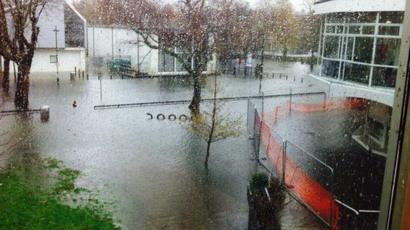
“during Christmas vacation 1999-2000, Park Avenue suffered extensive flooding. The library had to be evacuated, and thankfully we just managed to get the book stock out with very minimal damage. The library was homeless for a short while before it was decided, once the water had subsided, that it was too risky to return to the ground floor.”

Image result for winchester school of art library floor plan 1999
feb 2014

https://www.bbc.co.uk/news/uk-england-hampshire-41021903

Image result for winchester school of art library floor plan 1999
feb 2014
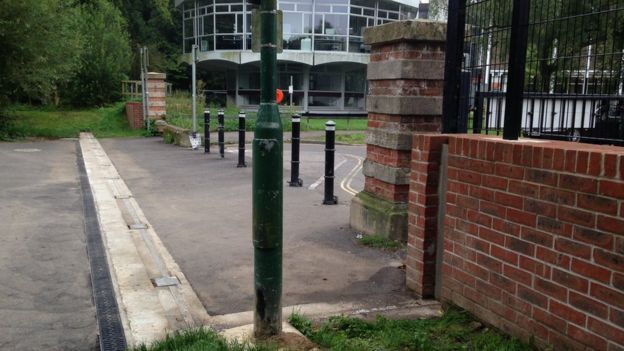
Flood defence scheme

“The library suffered another ‘near miss’ when just before it opened one morning  in February 2005, one of the Orb lights, (the huge lights hanging from the ceiling) fell down onto one of the tables and chairs causing a fire. Fortunately, the sprinklers sprang into action, dousing the fire and a member of security was quickly alerted before too much damage could be done.”

Lego serious play

Way finding – how do you walk around spaces without google maps – how would you do that without a map.

Long ago the Romans owned england and found a lovely little place which is now called Winchester. The Romans had a rule that their city’s needed to be one way and follow a grid system and the river was ruining this. They decided to relocate the river and run it around what now is WSA.

My story board shows this in the simplest way possible of the Romans clearing the river ready for relocation using the bush to represent the ground in which stopped the river following the way it presently does.


The Romans came in their boats and brought digging equipment such as shovels or bowls to move the mud and dig the new pathway for the river.

Once the new pathway was made the Romans used the river for transporting goods and getting around more efficiently.

AR Talk

Moving brands – Prototyping for immersion – experimental design

XR – Mixed reality

Less game like, more utility and daily life like.

Toby – works on creative technology

Guy – One of founders

Not specific to AR – Cruise – electric robot cars – Using map data to locate possible errors such as turning corners or future traffic lights.

Magic leap – Glasses that act like vr but work more like AR, seeing the reality but adds AR artefacts. Using low weight art work – low poly to have it run efficiently.

AR – using sound and devices to make the experience – all senses present

AR Comics – using parallax to make the comic pop and move around on the axis as the device moves.

using paper prototypes to create the base of your unity idea – use both linking physical and digital world.

Allow yourself to work on the prototyping rather than the product itself, experiment, explore and have a iterating process.

Showing the invisible – having digital assets use physical objects to interact with in the space – physical props

Google maps introducing AR into their app to increase movement/motion. Encourages you to look around and explore.

Markers and surfacing – be able to define location specific stuff

Things to consider – Simple interactivity – duration – single focus – economic strain – Distance of spaces and method of interaction.

WSA – Tour

On the tour I took voice notes as I wouldn’t have been able to take quick enough written notes. The voice recordings pick apart the history of the school by telling what it was and what it is now. I took several images of rooms and areas I thought would have good AR aspects within them or around them.

Areas I thought were unique –

The Retunda –

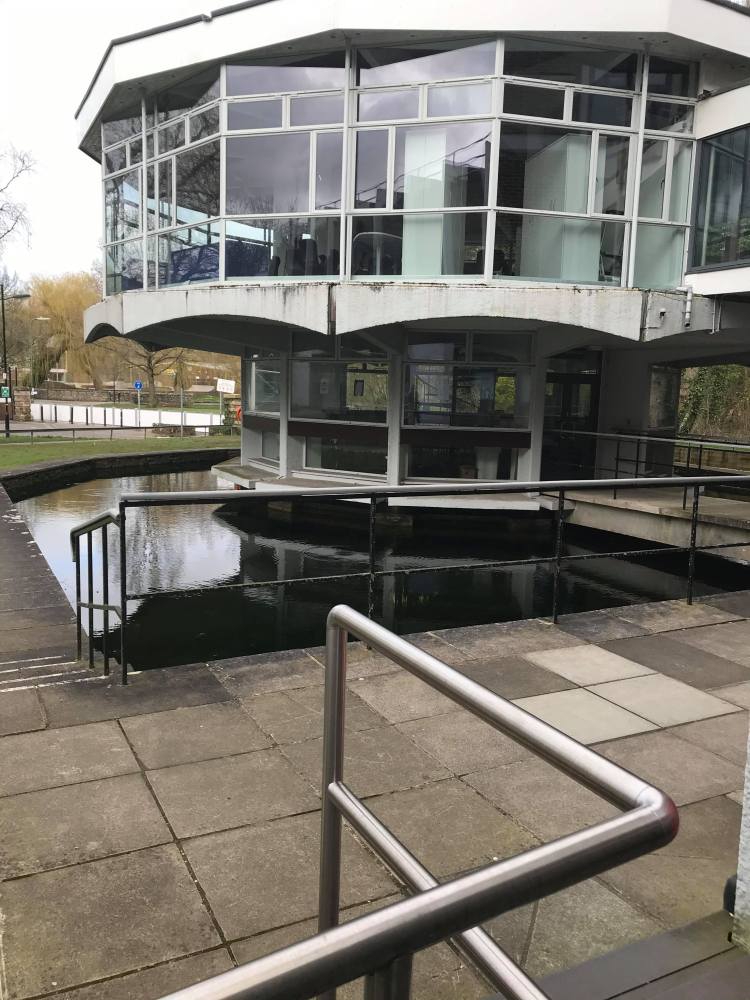
The Retunda is a very unique looking building and differs from the rest of the school of art as it had a separate Architect working on it to the rest of the building.

West side lecture theatre –

The Greenhouse –

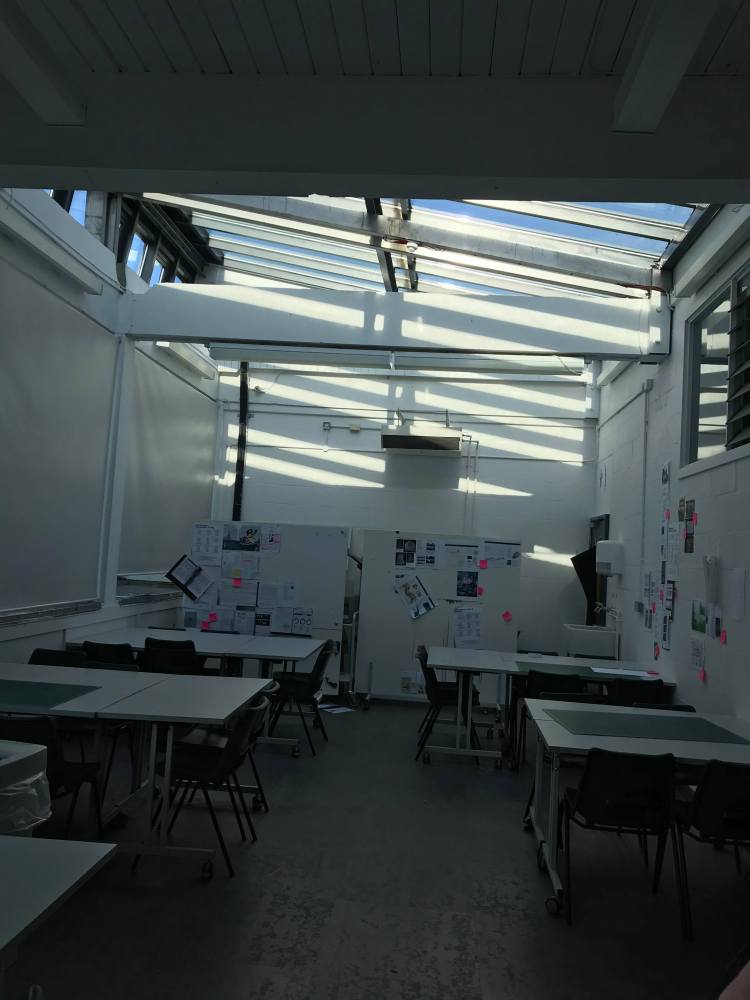
The green house one of the hidden gems within the school of art as it is very different to the rest of the surrounding space. It is spacious and well lit which is perfect for its original purposes. Having an area specifically for keeping plants in isn’t common within a university and is a very smart idea when they are needed for botanical drawing within fine art. The Greenhouse would have saved the uni some money when it came to buying plants as they would be able to keep and care for the plants allot better in this space than anywhere else – meaning they wouldn’t die as much and have to buy new plants for the art students to draw.

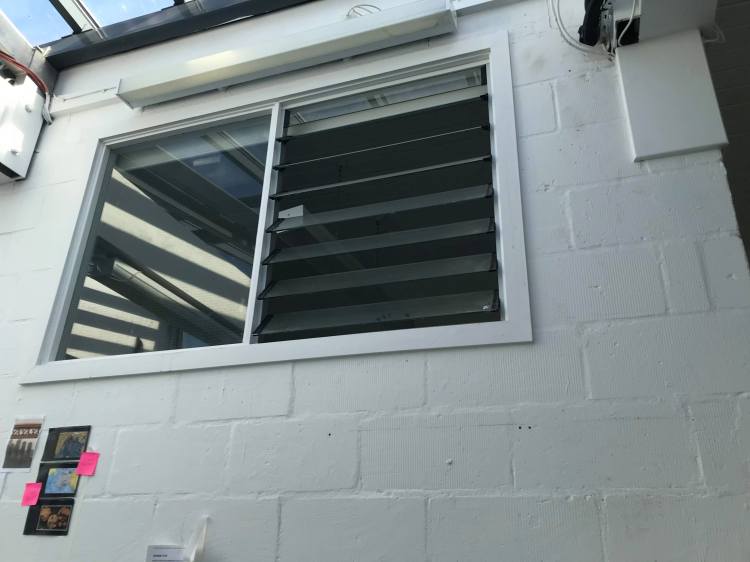
On one of the sides of the room there is a pair of shutters which I believe to be a new addition to the room. As the room was re-purposed I believe they were put in for better air flow through the room as the room was originally meant to be hot and humid.

What surprised me the most about the room is its location, it is right in the middle of the graphic work spaces and surrounded by many other rooms which don’t share its architecture or styling.

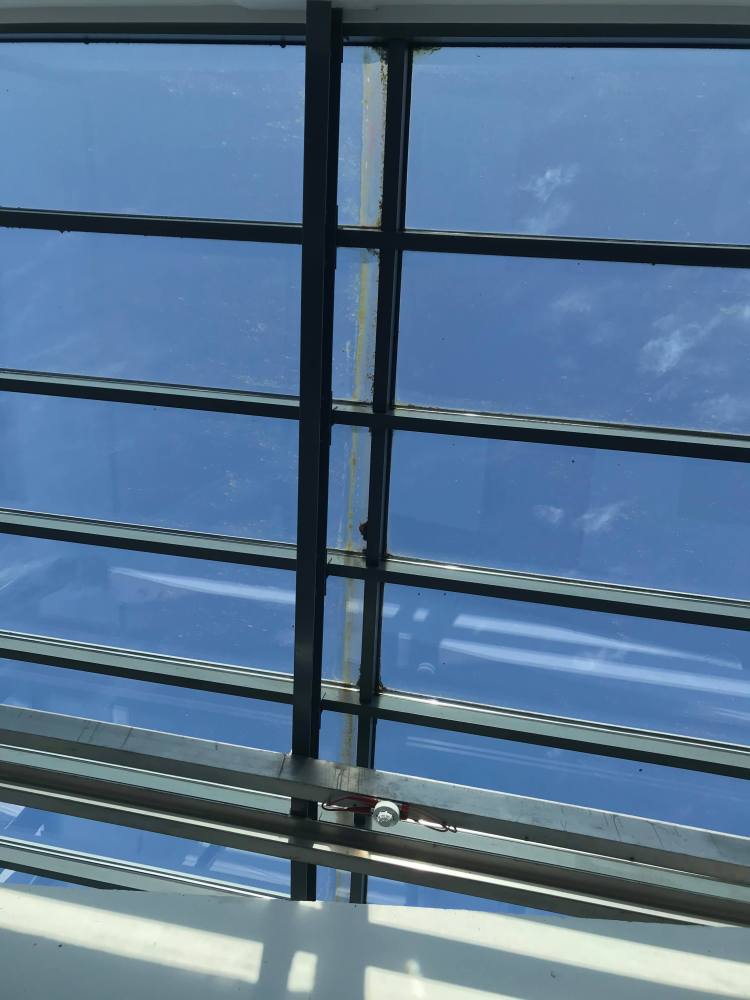
My favourite part of this room has to be the open space and use of the skylight. When you walk into the room you cant see why it would be used as a greenhouse and then you turn the corner to see the glass roof and its magnificent. You can tell that this space was specifically designed as a greenhouse and how it could have been laid out long ago.

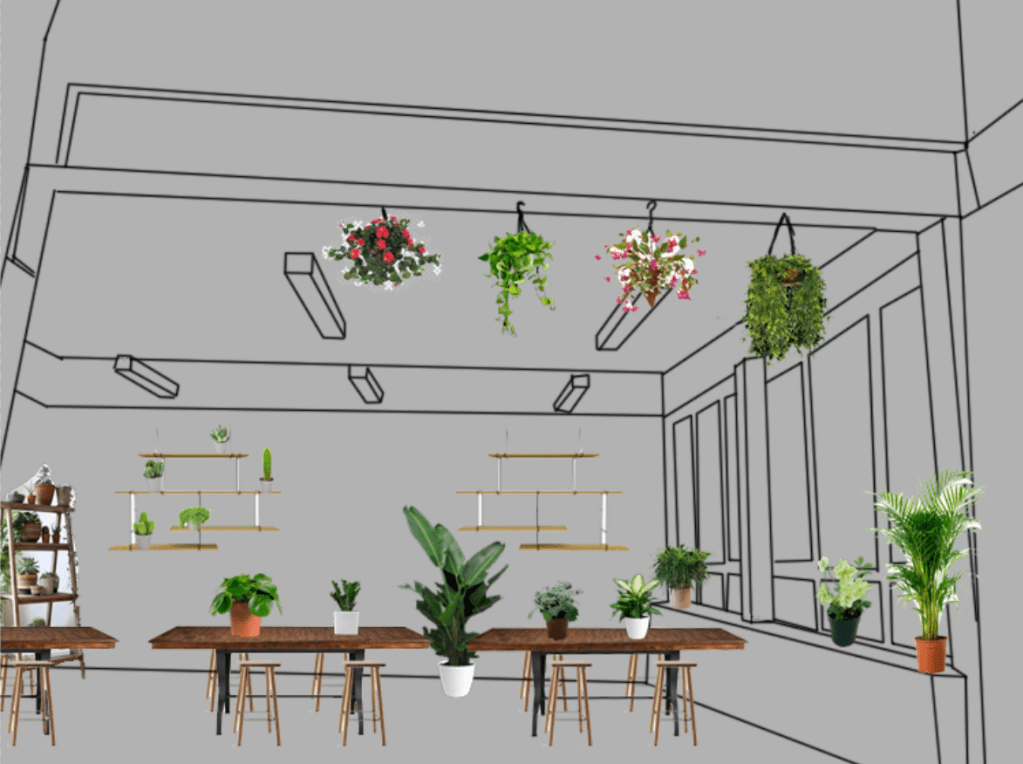
I decided that the best way to get an idea of what the greenhouse looked like besides the archive images, would be to reconstruct the area myself. I started by outlining the key features of the space such as the built in shelving and lighting and then later on the windows.

I then thought about what kind of furniture might be kept in this room. From the tour I learnt that the greenhouse was a space for fine art students to do botanical drawings and so I figured having old tables with stools would be necessary for drawing. I then looked at the room itself and thought that the back wall had allot of space to fill and I doubt it would have been originally plain so I added some shelving that plants could sit on.

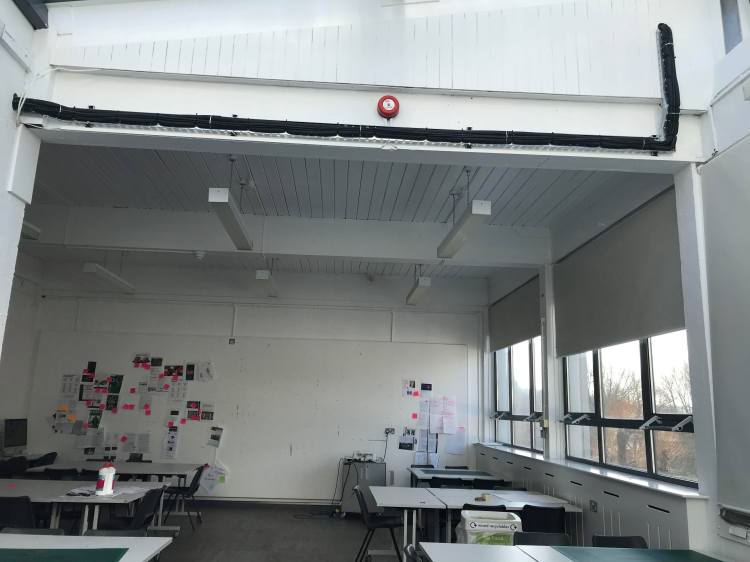
I also considered why they had many beans going across the ceiling and how that space could be used rather than stability and architectural purposes. I thought about having art hanging from above but felt because this space would be humid (due to it being a greenhouse) the paintings/drawings would leak and run or the paper would become damp and ruin the art. I concluded that the most likely thing they could have done with the space was to put hanging plants above or have it plain.

The Gallery –

The gallery space is big and open and has a well lit area towards the front of the building. I like the thought that this space use to be the library as it doesn’t particularly look like a reading space how it currently is. I can imagine the columns of shelves that held all of the books before the flood and how the dip within the back of the room could have been where the librarian sat or a sectioned off study area. Next to this area there is a door that leads into a side room, this could be where returned books that need to be re-shelved would stay or been a quiet study room for student.

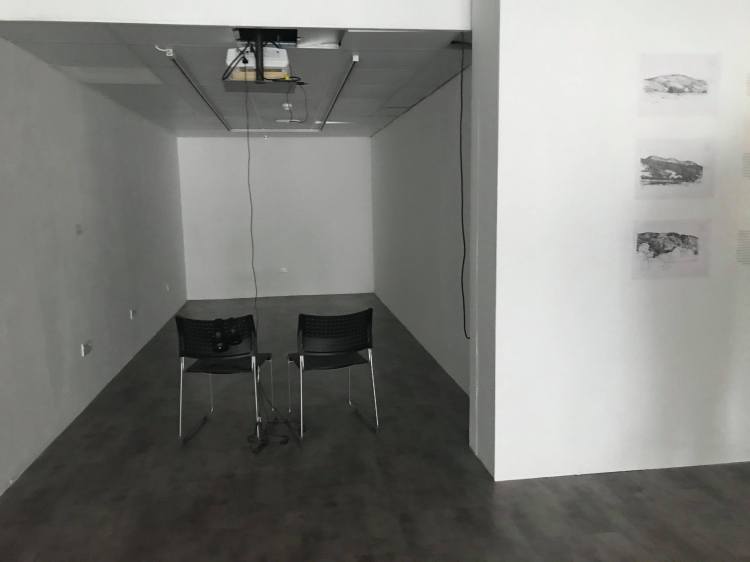
In the second image I noticed there is a projector set up which makes me believe that the space could have been used as a video viewing area. That could be more recent but if it was I can imagine there being an old style movie projector, the kind you find at drive thru movies and a white sheet being used as a screen.

From here each member of my group took the building they saw had the most potential and started working on it.

I took the Gallery, Keria took the Greenhouse and Molly took the Graphics department.

Design a site like this with WordPress.com
Get started